
AI integration is already widespread in product design – according to research by Adobe Experience Cloud, a massive 68% of companies already use AI to personalise user experiences.
Patterns, not people
Right now, we’re still on the clunky prototype version. Streaming platforms, for instance, try to be clever, but all they end up doing is flooding you with endless iterations of that one thing you watched. They don’t understand you, they’re just playing statistical bingo. Pattern-matching, not empathising.
Reimagining the relationship…
We’re rapidly heading towards a time when interfaces won’t need teaching. They’ll already know you. Picture a future where AI isn’t just an added feature – it’s the fabric woven into every device and system we use. Log in, and your AI profile follows you everywhere like a loyal, slightly overachieving assistant, shaped by every digital interaction you’ve ever had, from your taste in 1950s musicals to your inexplicable fondness for gory horror and K-dramas.
Your quirks, preferences and behaviours aren’t bolted on – they’re the blueprint. The design challenge shifts from building generic tools to crafting systems that anticipate, adapt and occasionally surprise you with connections you didn’t know you needed. User experience is no longer about buttons and layouts – it becomes a conversation between you and your AI self, fluid, invisible and deeply personal.
Why we’re stuck in pattern-matching mode
The interface issue points to a broader stagnation in product design. For years, we’ve built products on assumptions that are well-intentioned, but flawed. We collect data and gather it into personas, averages and tidy categories, but we’ve forgotten an important ingredient: empathy. We track what people do, but ignore the million-dollar question: Why?
The result? Users often carry the cognitive load. ‘Intuitive design’ simply means we’ve unwittingly trained billions of people to speak machine – every new app is a foreign country with its own customs. And so we adapt. We contort. We learn the logic of the interface, when the promise was always that the machine would learn ours.
Where design meets dialogue
In the field of conversational design, the imaginary future starts to feel a lot more in reach. We’re not just talking chatbots and voice assistants, but thinking systems with a true understanding of different formats. Systems that don’t just decide what to say, but how to respond. Should it speak? Show a graph? Offer clickable options?
In this reality, design becomes orchestration – a thoughtful blend of voice, visuals and touch. Your AI knows when to speak, when to show, and when to listen. The essence of good conversation, now applied to machines.
From architect to gardener: The designer’s new role
As interfaces evolve, so too must the designer. No longer architects of static screens, designers will become the gardeners of AI ecosystems that are truly adaptive.
- Designing systems, not screens
Instead of simply placing a button, we teach the system why and when a button should exist. We design the intelligence behind the interface, from pixel-perfect layouts to shaping the AI’s personality. - Choreographing serendipity
AI that only reflects our past shrinks our world. The new challenge is to design for curiosity, building systems that connect known passions to unexpected discoveries. - The ethics of a personal AI
With great personalisation comes great responsibility. A personal AI reflects its user, and designers become its stewards. Our job is to protect this digital twin from bias and exploitation, ensuring it doesn’t simply become a filter bubble with a friendly face.

Bridging Vision to Reality
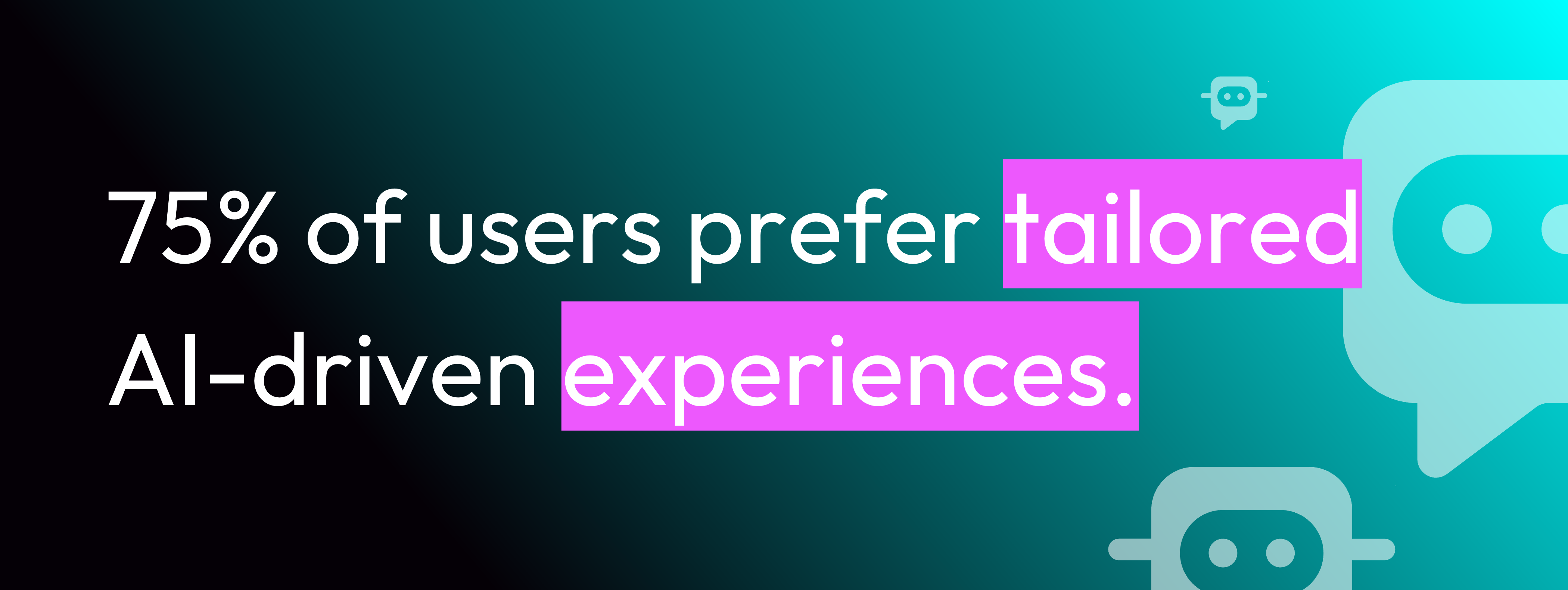
Personalisation is no longer a nice-to-have: 75% of users prefer tailored AI-driven experiences. It’s a baseline for modern interfaces, and this expectation will only grow as today’s clumsy pattern-matching gives way to nuanced understanding – a true partnership between human and machine with potentially transformative implications.
The shift toward adaptive, conversational and personal technologies in customer interactions is already underway. We see it in adaptive service journeys, blended human–AI support models, and context-aware customer experience design. These aren’t futuristic concepts – they’re practical evolutions of today’s CX strategies, where communication is responsive rather than reactive, personalised rather than procedural, supportive rather than transactional. By embracing these approaches now, we can begin laying the foundations of relational intelligence even as the technology continues to evolve.
But this future isn’t inevitable. It must be designed. Not to replace human thought, but to augment it — with empathy, intelligence… and just the right amount of surprise.
Ready to design experiences that truly understand your customers? Let’s start building the future together.
Just drop us a line or give us a call.